Sophie Thun Poland, b. 1985
-
 Extension 8 x 12, 2015
 -
Contact (Durchgang), 2018
-
Orientalischer Hamam & Sauna E-Fit, 18.07.2019, FL, 2019
-
Shifted (KJ MF MS AG F W LM AS EW), 2023
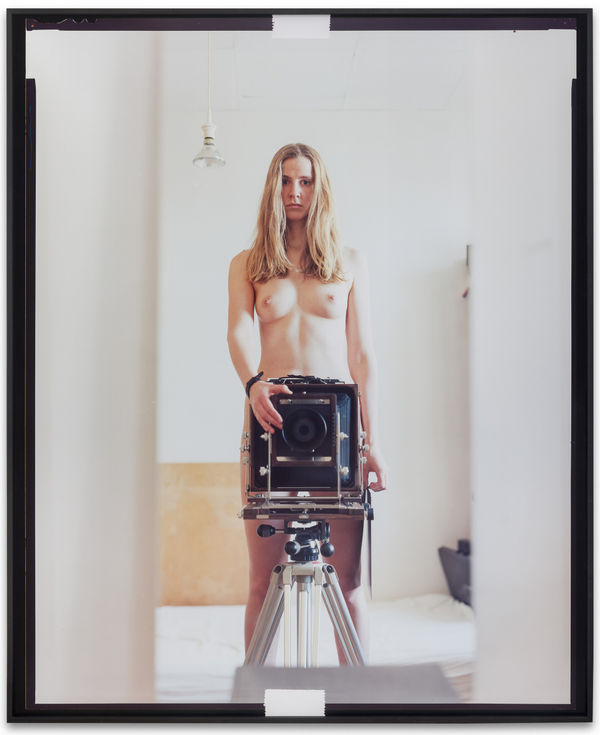
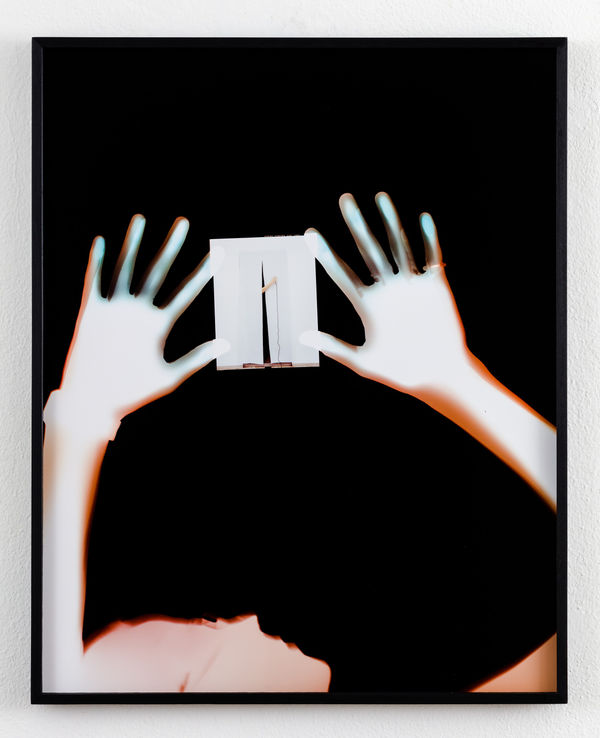
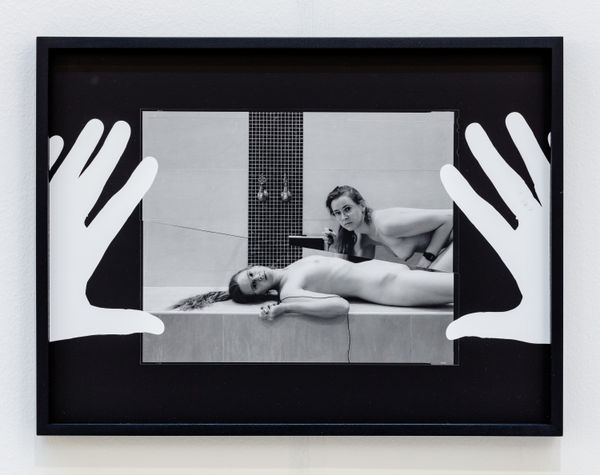
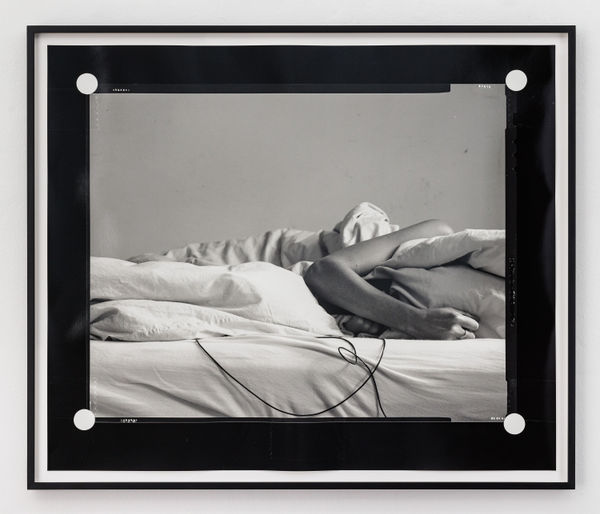
Thun’s work incorporates photography and collage, typically using her own body to examine the integral relationships between the site of production for the work, and its place of presentation. Working predominantly with analogue photography, Thun engages with a combination of large-format photography on negative and photogram. Her images often deal with the long-standing artistic tradition of self-representation; using herself as the subject, Thun addresses societal issues such as gender roles and assumptions of what a female artist should be and do.
In Extension, Thun’s first institutional show at C/O Berlin in 2020, Thun addressed themes of female self-presentation, an ongoing and integral thread throughout her work. Depicting herself multiple times in both positive and negative form, she printed these images onto long photo paper banners which she then hung from the ceiling. Containing art historical motifs that go back as far as the sixteenth century, Thun’s work often references the age-old tradition of female self-portraiture, looking to Renaissance and Dutch Golden Age artists such as Artemisia Gentileschi, Clara Peeters and Judith Lyster. Within these works the artists facilitate the trompe-l’oeil effect, whereby something is artistically rendered so accurately that it appears real. Thun makes use of this by upscaling her photographic interventions to match the gallery’s dimensions, also employing the method of mise-en-abyme (an image within an image) which gives an illusionistic impression of depth and three dimensionality.
In her exploration of the tradition of female artistry, Thun addresses the uncomfortable working conditions in which many women artists still find themselves today, bringing in her own personal experiences of labour, much as Wermers does with her Reclining Female series. Thun herself works as an assistant to successful, usually male, artists, and shoots her own work when she can at night, often on work trips in locations (usually hotel rooms) determined by her employer, and using whatever tools are available to her, specifically, her body, cable release and camera. By photographing and duplicating herself in compromising, provocative positions, usually in the nude, Thun references the sexuality of mythological art in subjects such as Leda and the Swan, the Rape of Europa and Susanna and the Elders, which depict naked women in often non-consensual situations. As UK artist Sarah Lucas usurped the traditional hierarchy of female sexuality in the 1990s by evoking crude humour through her sculpture, Thun assumes complete ownership over these artistic motifs by placing herself in both typically female and male roles.