Samira Abbassy Iran, b. 1965
-
 Consuming Herself, 2024
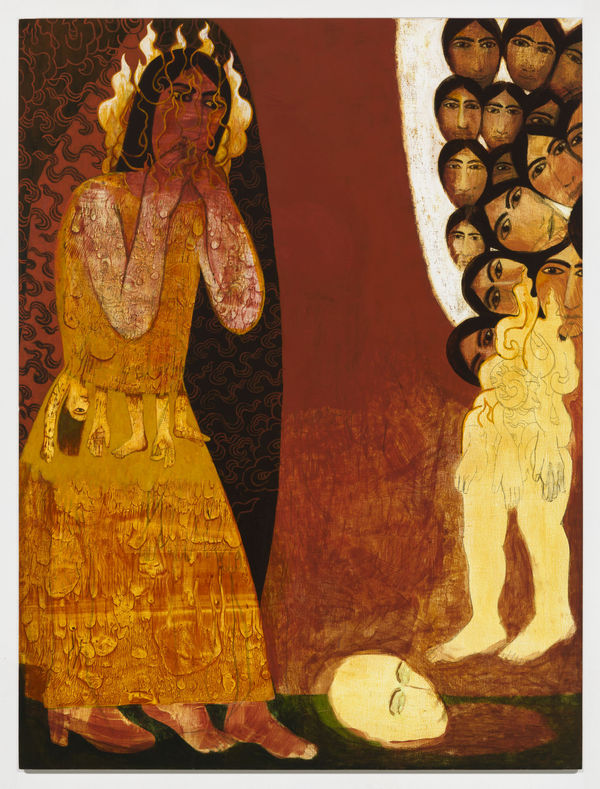
Samira Abbassy (b. 1965, Ahwaz, Iran) is an Arab-Iranian-British artist based in New York. Her evocative, intricate works explore themes of identity, heritage, and the intersection of culture and gender. Abbassy’s art is deeply influenced by her experiences as an immigrant, with her personal connection to her Iranian roots woven into the fabric of her creative process. Through this she explores the complexities of femininity, gender roles, and the evolving identity of women in a globalized world.
Abbassy paints in oil on canvas and panel, as well as creating smaller works on paper and board, using collaging techniques with acrylic, ink and gouache. Her oil paintings, textured and patterned, reflect an intuitive, personal vision. This vulnerable expression invites both beauty and anguish, offering a glimpse into the artist’s perception of the world. Abbassy’s practice also examines cultural exchange and translation, paralleling her Iranian-American experience with the transformative efforts of Qajar artists who turned manuscripts into grand paintings, shifting meanings along the way.
Her emotive, dreamlike imagery immerses us in the depths of the human psyche, gracefully exploring the metaphysical aspects of the figure. Abbassy breathes life into metaphorical reincarnations of inner states, capturing the full spectrum of human emotion from violent turmoil to euphoric transcendence. Drawing inspiration from Dante’s ‘Inferno’, her figures twist and writhe, their forms mirroring emotional battles, sometimes reshaping into animalistic bodies or bodiless heads. Yet, symbols of hope like birds or butterflies emerge, gently guiding the viewer towards liberation and transformation.
Rooted in a harmonious blend of Persian heritage and Western traditions, Abbassy’s works draw from the elegance of Qajar Court Paintings (19th Century) and Hindu iconography. She often invites multiple selves or a singular, unified self to step into the light, each revealing the universal experiences that bind us all.