-
Artworks

Alexandra Bircken Germany, b. 1967
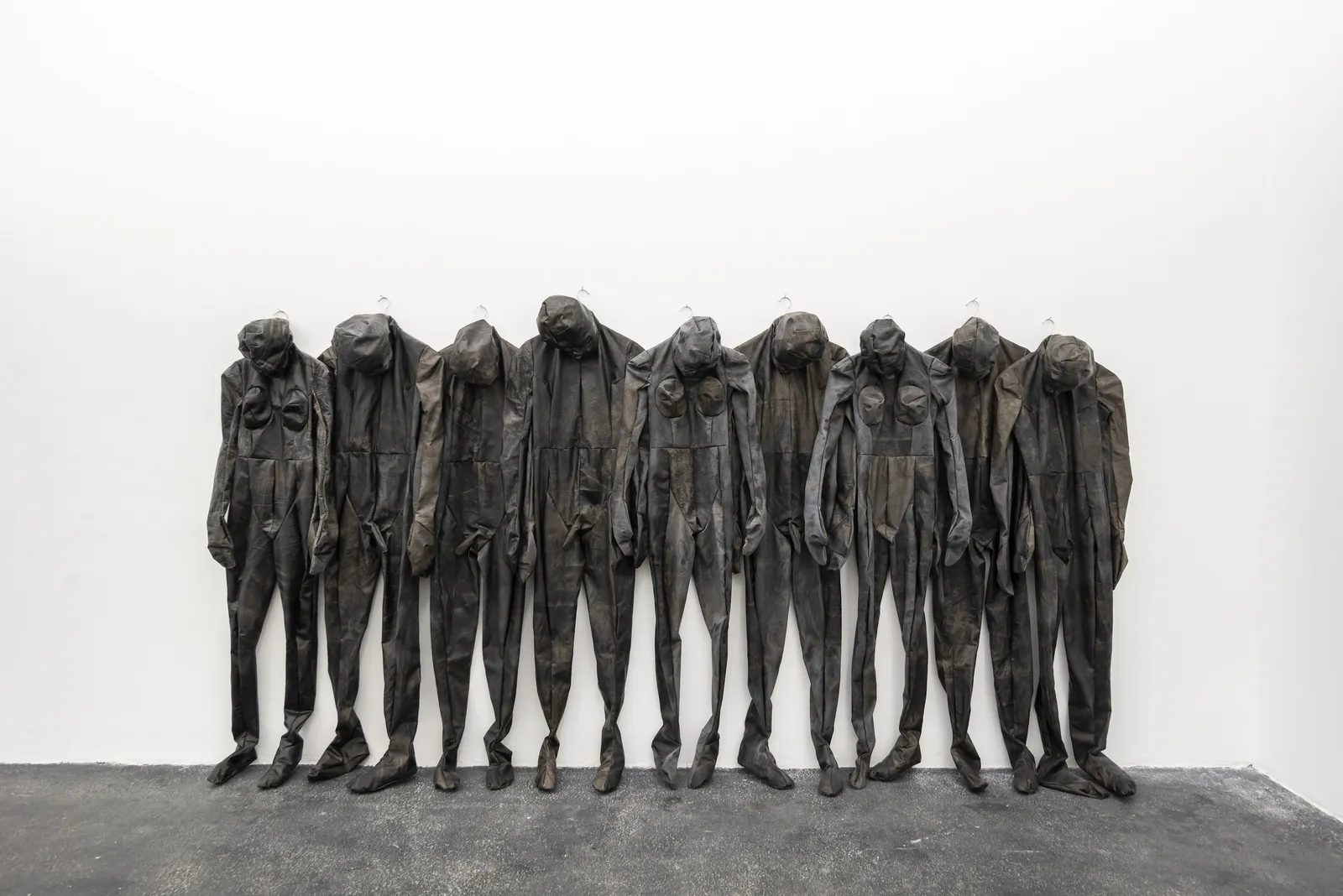
Deflated Figures, 2022Latex, wadding, cotton fabric, coat hangersDimensions variable© Alexandra Bircken. Courtesy of the artist and Herald St, London. Photo: © Crac Occitanie, Sète / Cyril Boixel.The human body and its vulnerabilities are important themes in the works of German artist Alexandra Bircken (b.1967). Having studied fashion design at London’s Central Saint Martins School of Art...The human body and its vulnerabilities are important themes in the works of German artist Alexandra Bircken (b.1967). Having studied fashion design at London’s Central Saint Martins School of Art & Design in the early 1990s, she was employed in the industry for several years before becoming frustrated with its view of women and outdated concepts of beauty. Working as an artist since 2003, she uses materials including textiles, wood, steel, bronze, latex, sportswear and even deconstructed motorcycles to create sculptures and installations that examine the interplay between the bodily interior and exterior. The role of skin as a boundary between inside and outside is addressed in her ‘Deflated Figures’ series. Begun in 2014, these installations of flaccid black latex body suits play on the tension between the lifeless rubber forms and the uncanny, corporeal presence they possess. Like flayed skins, the figures variously dangle from rafters, negotiate ladders, lie on the floor or, as here, hang from the wall on coat hangers.
Resembling discarded pieces of clothing, Bircken’s life-sized male and female figures (distinguished by their rudimentary genitalia) have a dehumanised quality. This is similarly apparent in the bronze sculpture Eva, a life-sized torso of a woman cast from a Japanese sex doll. Unlike idealised representations of the female figure found in classical sculpture – typically presented upright to demonstrate the sculptor’s artistic mastery of replicating the human form – Bircken’s work unambiguously depicts a sexual object: the doll’s backside and faux vulva, complete with the manufacturer’s sewing lines, confrontationally meet the viewer’s eye. Its richly patinated surface recalls the oxidised copper of neglected, weatherworn public monuments, a finish evocative more of decay than lust or sexual gratification. In this, Bircken nods to the deterioration of human interaction and intimacy as surrogates imitating the human body increasingly grow in acceptance.
Exhibitions
Sète, Centre Régional d’Art Contemporain Occitanie, Alexandra Bircken: A – Z, March – May 2022.2of 2