-
Artworks

Grayson Perry United Kingdom, b. 1960
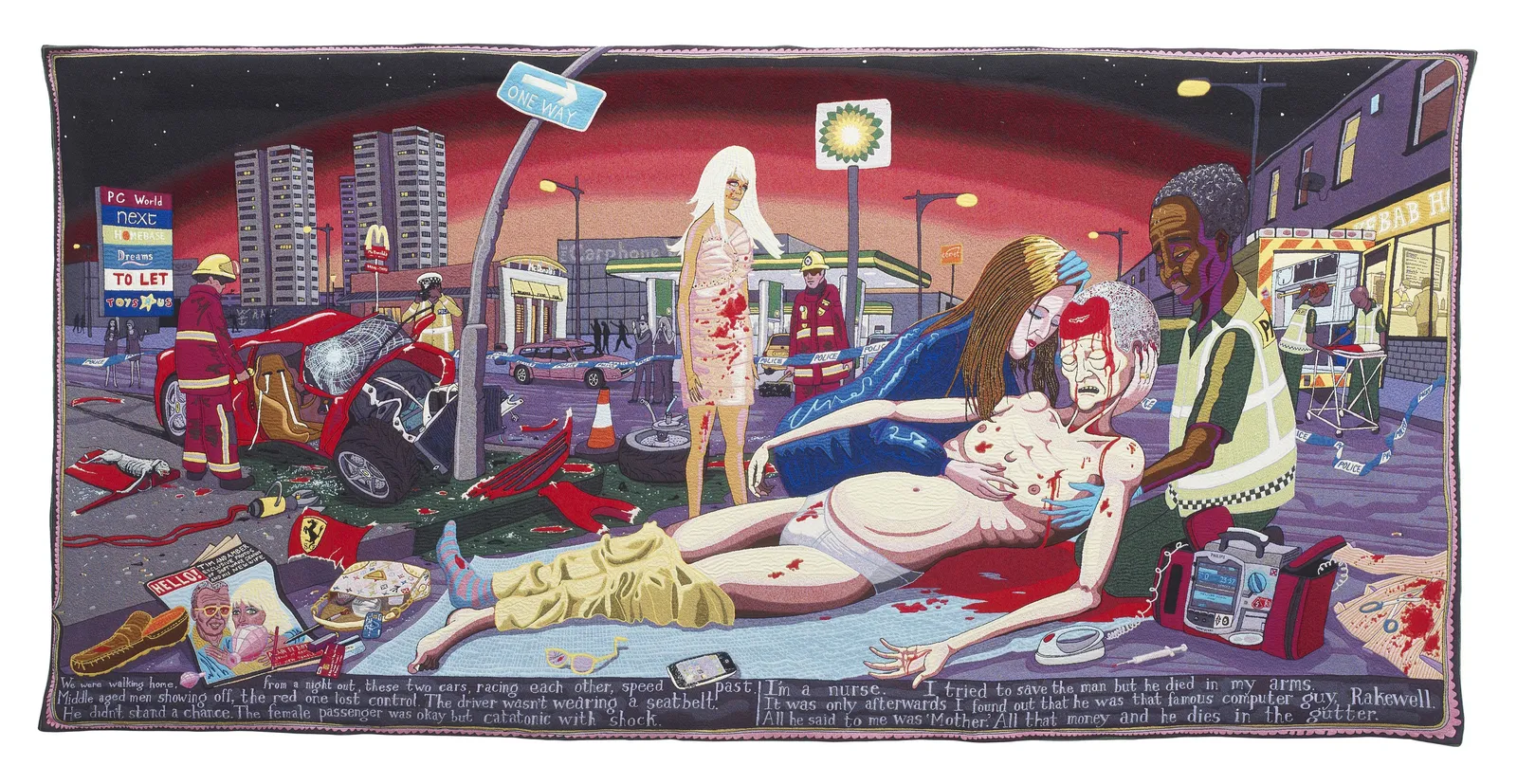
#Lamentation, 2012Wool, cotton, acrylic, polyester and silk tapestry200 x 400 cm (78 1/2 x 157 1/2 in)Edition 5 of 6 plus 2 APsKnown for straddling high and low culture, Grayson Perry (b.1960) is renowned for his ceramics and public appearances cross-dressing as his alter ego, Claire. His elegant pots and vases take...Known for straddling high and low culture, Grayson Perry (b.1960) is renowned for his ceramics and public appearances cross-dressing as his alter ego, Claire. His elegant pots and vases take the form of classical pottery yet are decorated with incongruously sexual or violent motifs and cutting social commentary. In recent years, the Turner Prize-winning artist has designed large-scale tapestries on contemporary themes with The Vanity of Small Differences (2012) among his most ambitious. The six-part work was conceived while Perry was filming a Channel 4 television programme exploring taste and class divisions across British society. Inspired by William Hogarth’s satirical series A Rake’s Progress (1732–33), the colourful tapestries are a wryly observed exploration of class mobility that tell the story of fictional character Tim Rakewell as he climbs the social ladder, from humble working class beginnings to making his fortune in computer software.
The fourth tapestry, Expulsion from Number 8 Eden Close, illustrates the moment at which Tim and his girlfriend flee his parents’ home after an argument. Passing through a rainbow, they are welcomed into a bourgeois north London dinner party. As with the other tapestries in the series, the composition pays homage to a work of Christian religious art, in this instance Masaccio’s Expulsion from the Garden of Eden (c.1425) – the implication being that, like Adam and Eve, the young couple are guilty of a sin.
The final tapestry in the cycle is #Lamentation, which shows the aftermath of a car crash. Tim lies dead, held by a passerby and paramedic as his glamorous wife stands at a distance. The image, which reinforces the moral message that wealth and status do not guarantee happiness, echoes Rogier van der Weyden’s Lamentation of Christ (c.1460), an altarpiece depicting the Virgin Mary kneeling by her dead son.
1of 3