-
 Her life as a body: Women Artists, Agency and the Corporal Subject
What is required for an artist or writer to represent the human body? Knowledge of anatomy? Academic artistic training? The firsthand experience of inhabiting the human body? Such questions might seem rudimentary, maybe even specious — especially given the primordial place that representations of the human body have in the Western art canon spanning millennia. Yet a more critical probing of what might be understood as a primary, natural subject of art history is revelatory. Who has been able to represent the body? Which bodies are represented and how have those bodies been represented—as well as how these representations have been historicized and categorized (e.g. genres such as the nude, full length portraiture, etc)—are as crucial as the knowledge required to produce such representations.
Whether using a pen, a paint brush, a camera or a sculptor's chisel, the representation of corporal experience requires more than skill, training, or access to materials. What role does the legal and social status of the maker play upon the ability or access to making such work? Can an artist or writer create a representation of the human form when they do not have autonomy over their own body? Is it possible to represent something that one does not have proprietary control over? When thinking about centuries of gendered gatekeeping and heterosexual hegemonies that have governed artistic practices and the writing of history, it could be argued that an artist’s agency is as crucial as skill or materials.
The art historian Mary Garrard reminds her readers of a simple but often forgotten fact in the opening chapters of Artemisia Gentileschi and Feminism in Early Modern Europe (2020). “In 1593, when Artemisia Gentileschi was born, women were legally the property of their fathers or husbands. They did not own their bodies.”[1] Garrard’s opening salvo about women’s lack of legal and practical dominion of their own bodies is crucial to understanding why figurative works by women artists carry a particular historical weight. While Artemisia is not the very first woman artist in the history of European art to depict the female body,[2] she is certainly the first to depict women’s fight for bodily autonomy. Her very first known painting Susanna and the Elders (1610) did not just depict a popular Biblical scene—one that provided a convenient narrative excuse for male artists to eroticize the nude nubile body of the young girl at the center of their compositions, a phenomena that scholar Linda Nochlin pinpointed as “the whole tradition of masculine mastery and feminine display which underpins so much of Western pictorial culture.”[3]Artemisia’s Susanna broke with this tradition by projecting her own experience of as a struggling body under the threat of sexual violence—capturing the young heroine’s emotional distress, muscular tension, and posture of resistance as she struggled to thwart advances of the lecherous men hovering above her. As Artemisia did not “own her own body,” she was forced to prove that she was violated through public humiliation and torture at public trial to ensure the veracity of her experience (to clear her name, and more importantly, to salvage the reputation of her father Orazio). The ongoing fallout of her emotional and physical ordeal many scholars have deciphered in her allegorical depictions of women struggling against patriarchal control of their bodies. Artemisia is a watershed artist on so many levels, not least of which that she represents the first time in art history that “sexual predation is depicted from the point of view of the predated.”[4]
With the understanding that representation is a form of power, Artemisia is the artist first claimed her lived BODILY reality in the sphere of art—sparking a new paradigm of artistic agency at a moment when the fight for bodily autonomy and the articulation of the first treatises on women’s rights were in their infancy. Artemisia is the first artist to depict her life as a body [5]—a body under duress, a body that she struggled against the rule of law to control her corporal destiny. Her representations of the female body were not just academic exercises or Baroque rehearsals of female nudity to ignite male delectation. Through her depictions of mythological and Biblical femmes fortes—the art historical genre that focused upon heroic depictions of strong women—Artemisia re-narrated familiar stories of Judith, Mary Magdalene, Cleopatra, Lucretia, among others who rebelled against their fathers and husbands, took their lives in their own hands, and even dared disobeyed state power. By defiantly refusing her sociopolitical status by asserting women’s bodily autonomy, Artemisia’s bold visual narratives opened the door to woman artists to carve out pictorial agencies well before their legal rights and bodily autonomies were secured.
-
ECCE FEMINA
As one of the first feminist artist in Western history, Artemisia Gentileschi’s radical DNA lives on in the work of all women artists and writers who have in her wake claimed back their bodies by channeling the power of figurative representation. When understood in through the lens of a larger socio-political struggle for women’s rights, each and every representation of the human body by a woman artist made today might be understood as haunted by the memory of bodily dispossession. Trauma, as we know from Holocaust studies, is transmitted generationally. Two decades into the twenty-first century, it is hard to believe that the female body remains a site of struggle for self-determination. Despite the success of nineteenth century suffrage and the intersectional triumphs of the women’s movement over the twentieth century, women’s bodies continue to face perils to their bodily autonomy: the erosion of abortion rights plague Western democracies. Misogynous agendas still drive mainstream politics, such as in Italy, Hungry, and the United States where legislative agendas have been aggressively pursued to privilege reproductive, heteronormative families, to marginalize LGBTQ rights, to police gender-nonconforming bodies. Across the globe, the right-wing populists have called for a war against so-called “gender ideology” precisely as a backlash against the mainstreaming of anti-racist, feminist and queer politics threatens the golden days when patriarchal order exerted control over women, sexual minorities, and people of color.
Such patriarchal order has equally shaped art history—a legacy that is being slowly dismantled today by a number of scholars who have been actively questioning the traditional canon of Western art. For a public collection such as Fortress House that concentrates upon figurative art and the persistence of the human form in postwar and twenty-first century art, the fraught history of women’s bodies and their relationship to power is writ large. A wide range of women artists make up the core of the collection—from 20th century grand dames of sculpture Louise Bourgeois, Alina Szapocnikow, and Kiki Smith to 21st century trailblazers such as Rineke Dijkstra, Tracey Emin, Sarah Lucas, Rebecca Warren, and Paloma Vergas Weisz. Ecce Femina! Behold the Woman! Read through the lens of the history of women’s struggle for bodily autonomy and the perpetual battleground of gendered control of bodily autonomy, this ensemble of art works makes apparent the ways in which women artists have materialized in images, objects, and words their own hard fought corporeal self-determination, bodily pleasure as well as pain, resistance, and loss.
One of the most emblematic works in the collection, Magdalena Abakanowicz’s Small Figure in Iron House (1989-90) encapsulates the question of bodily fragility and political struggle of women. Sculpted from burlap—one of the artist’s signature materials, coded both with gendered labor of women’s work with textile as well as the materiality of agrarian industry –it depicts a headless body sitting inside a metal structure. This solitary figure is enclosed in what might be understood as a solitary cage or a domestic space for one—although the “house” in question has no real walls. At the time of its making, Abakonowicz’s work was understood geopolitically as it was made at the crescendo of the Solidarność movement and the collapse of Soviet domination of her native Poland. Yet this (self) confined figure might also allegorize the bodily condition of women—who are imprisoned by threats to their corporal safety, shackled by the legacy of traditional domestic female roles, and yet exposed to the menace of the outside world in a house with no walls. Abakonowicz’s iconic sculpture simultaneously telegraphs both women’s strength and subjection to corporeal vulnerability.
The shackled body is a trope poignantly taken up by Kiki Smith. Like Artemisia before her, Smith has transformed familiar stories of Biblical heroines through her own experiences as well as through the lens of the gender politics of our times. Her bronze sculpture depicting Mary Magdalene—the Ur-figure of woman’s conflictual stereotypes as either saint or sinner—portrays the reformed saint as standing nude looking upwards. The broken chain attached to the ankle of her right foot suggests that she has just escaped incarceration while her unclothed body carries the charge of eroticism associated with the lore that Magdalene was a sex worker before her redemption through Jesus Christ. The surface of the cast bronze is scored with hair-like markings, referring to late Gothic depictions of the saint as a “wild woman” wandering the desert as a hermit in repentance for her sexual promiscuity. Smith’s hirsute Magdalene is defiantly solitary—she is an agent of liberation. Smith’s version of the Magdalene story might be interpreted as the tale of a woman who successfully untethers herself from the men who defined and judged her. This possible reading is echoed in Smith’s own words, “Our bodies are basically stolen from us, and my work is about trying to reclaim one's own turf, or one's own vehicle for being here, to own it and to use it to look at how we are here.”[6]
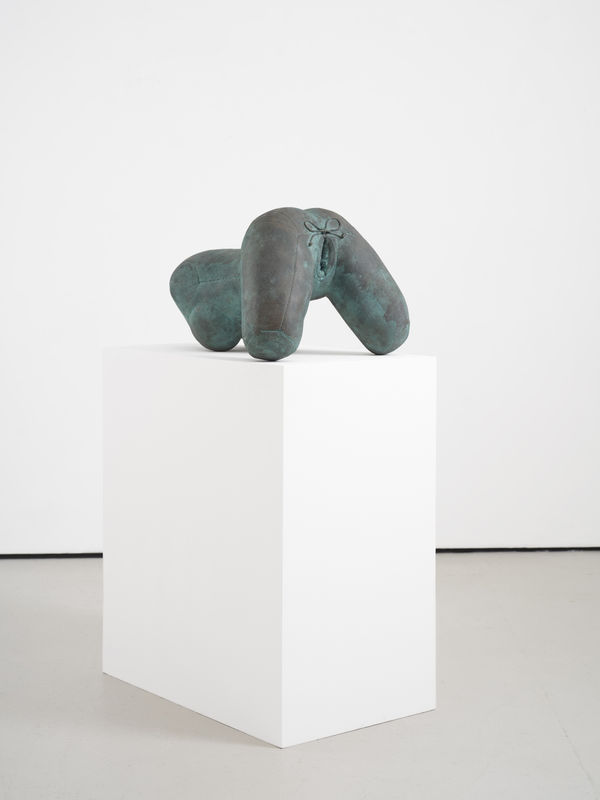
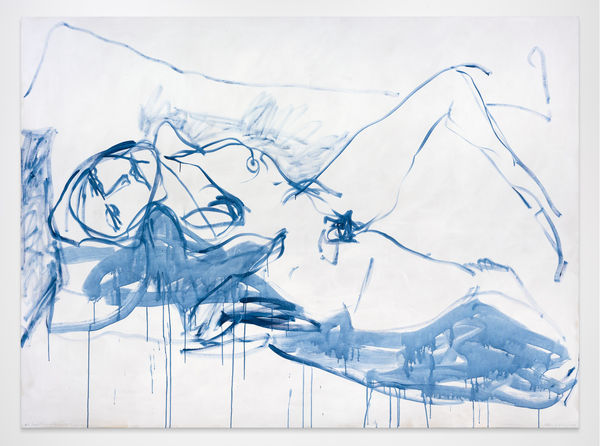
This assertion of agency in terms of her own self-definition via the body is a thread that appears in the work of several artists in the Fortress Collection. Alexandra Bircken’s Eva—a provocative bronze sculpture of a woman’s pelvis, cocked at such an angle as to blatantly display the subject’s genitalia—is another revolutionary reclamation of an archetypal Biblical figure. With its aggressive and unapologetic display of the female sex organs, Bircken’s sculpture offers a sex-positive version of Eve that not only is the mother of all humankind as her exposed vulva would suggest, but also through her exhibitionism she proclaims herself as an unrepentant erotic being—Courbet’s The Origins of the World be damned! Similarly, Tracey Emin’s entire oeuvre has laid bare her joys and struggles of both body and heart. Her unrelenting autobiographical exploration spares no intimacy, disclosing details about her youthful sexual promiscuity, her survival of rape, her experience of abortion, romantic fulfillment and disappointment, as well as the experiences of psychic torment, illness and aging. Executed in her signature expressionist drawing style, the painted self-portrait Everything was Beautiful, Even Me (2022) portrays the artist as a writhing nude odalisque—both inscribing herself as the subject of a well-worn art historical genre while asserting a first-person authorship and the seizing of the agency through self-display. When considered as part of a larger oeuvre that is fueled by unfiltered exhibitionism and confessional self-narration, Emin’s painting manifests an erotic political agency that was once unthinkable—even by radical feminist standards. Traversing painting, sculpture, performance, literature and film, Emin has transformed a lifetime of trauma, joy, heartache, and survival into a gesamtkunstwerke. Characterizing her practice as “thinking with my body,”[7] Emin personifies the singular power of the visualization of our ongoing struggle for women’s liberation as a physical as much as intellectual battle.
-
BODIES THAT MATTER
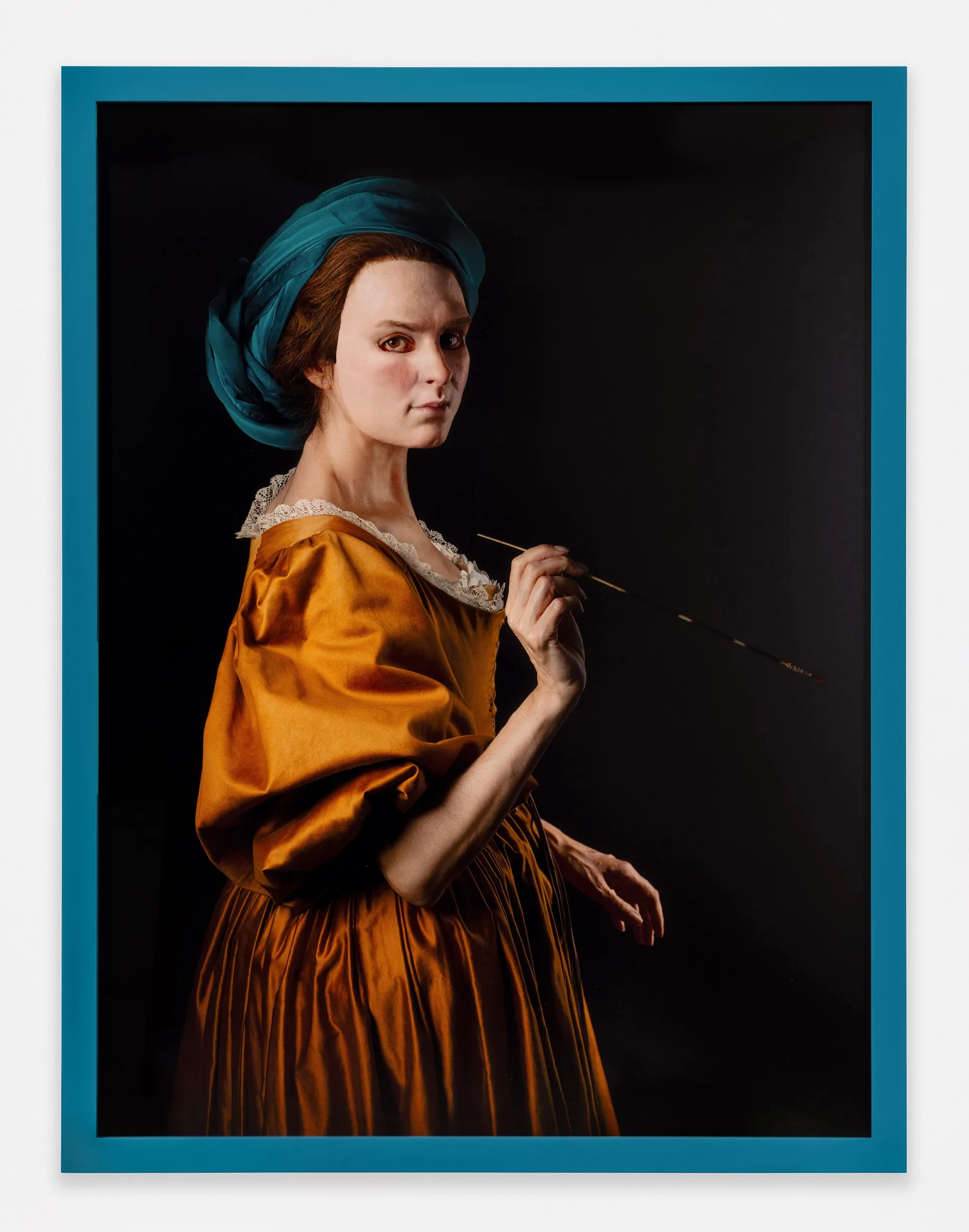
Women’s bodies matter. How women artists engage with the body matters. While the human form has long been a dominant subject in Western art, historically regarded as universal, the specificity of women’s authorship is inseparable from the larger social, political, and bodily struggles that shape their existence. The ways in which women artists represent bodies—rendering them, narrating them, and reimagining them—are acts of resistance and reclamation, forces that redefine the terms of corporeal experience. The legacy of bodily dispossession—whether through legal constraints, sexual violence, or patriarchal control—continues to haunt artistic practice. Yet, women artists have consistently carved out distinct forms of agency, using their work to overcome the traumatic histories of dispossession and silencing. The corporeal subject, once bound and controlled, now speaks, breathes, and resists, inscribing its presence and power into the annals of art history and the ongoing struggle for gender equality. By tracing the genealogical line of feminist representations of the body, from our foremother Artemisia Gentileschi—whose legacy is directly embodied in the Fortress House Collection via Gillian Wearing’s Me as Artemisia Gentileschi (2023)—we see how women artists have harnessed the transformative power of representation to reclaim their selfhood, forging an alternative canon of unruly, autonomous corporeal subjects. As Artemisia herself boldly declared in a letter to a patron, “A woman’s name raises doubts until her work is seen. I will show you what a woman can do.” This audacious provocation resonates powerfully, living on through the work of her artistic descendants, who continue to shape the conversation around the body and its place in art.
-
[1]Mary D. Garrard, Artemisia Gentileschi and Feminism in Early Modern Europe, London: Reaktion Books, 2020, p. 13.
[2] Lavina Fontana (1552-1614) is considered the first women artist to paint a nude in the Western canon, a generation before Artemisia. Though her canonical, corporeal works such as Venus and Cupid (1592) and the full-length Minerva Dressing (1619) remain quite classical in their mythology derived iconography. The depicted bodies (as well as the narratives are idealized in keeping with Renaissance artists’ preoccupation with beauty and perfection, rather than the radical rupture that Artemisia Gentileschi’s portrayal of the body inflected with real lived experiences of actual women.
[3] Linda Nochlin, Bathers, Bodies, Beauty: The Visceral Eye, Cambridge: Harvard University Press, p. 8.
[4] Garrard’s book Artemisia Gentileschi: The Image of the Female Hero in Italian Baroque Art, (1989) as paraphrased in Rebecca Mead, “A Fuller Picture of Artemisia Gentileschi” The New Yorker, September 28, 2020, https://www.newyorker.com/magazine/2020/10/05/a-fuller-picture-of-artemisia-gentileschi
[5] The title My Life as a Body is lifted from a young adult novel by Norma Klein. In this coming-of-age story, the entire narrative arc follows the teenaged protagonist who “discovers that living a life of the mind does not preclude the life of the body.” (See Naomi Fry, “My Life as a Body” The New Yorker, June 26, 2024). Going beyond the classical mind/body split, this young adult novel takes up this charged sexual epiphany as experienced by young women who are, despite the advances of feminism, conditioned to repress their bodily autonomy and struggle to allow themselves to fully inhabit, enjoy, or express themselves with their bodies.
[6] Jo Anna Isaak, Kiki Smith (London: Whitechapel Art Gallery, 1995) p. 22
[7] https://www.lrb.co.uk/the-paper/v33/n16/marina-warner/at-the-hayward
Bodies that Matter: Alison M. Gingeras
Learn more about collection themes viewing_room